Integrated Production Line Configuration for Yogurt, Pasteurized Milk, and Ice Cream
Issacindustry
Integrated Production Line Configuration for Yogurt, Pasteurized Milk, and Ice Cream
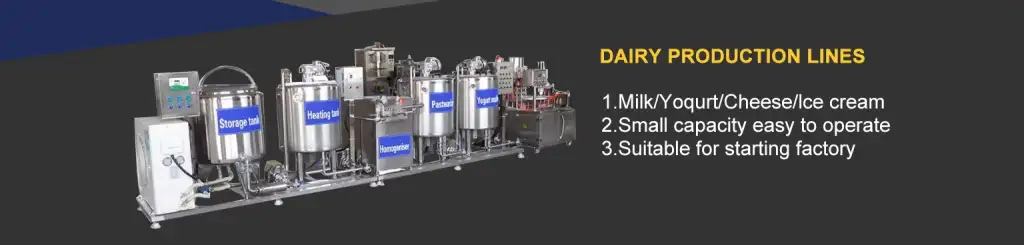
To simultaneously produce yogurt, pasteurized milk, and ice cream, a flexible, multi-functional dairy processing line is required. These three products share common upstream processes (milk reception, clarification, standardization, homogenization, and pasteurization), while requiring dedicated downstream modules for fermentation, packaging, or freezing.
Here is a scientifically sound and cost-effective production line configuration, balancing efficiency, hygiene, and capital investment:
I. Common Pre-Treatment System (Shared by All Three Products)
✅ This section serves as the foundational shared segment for all products.
| Process Step | Equipment | Function |
|---|---|---|
| 1. Raw Milk Receiving & Temporary Storage | Milk tanker docking station + duplex filter + centrifugal clarifier + refrigerated milk silo (with agitator) | Filters impurities, cools milk to 4°C, and stores temporarily |
| 2. Standardization | Centrifugal separator | Adjusts fat content (e.g., for whole/low-fat milk or ice cream base mix) |
| 3. Ingredient Blending (if needed) | Mixing tank + inline high-shear mixer | Adds sugar, stabilizers, fruit preparations, flavors, etc. (commonly used in yogurt and ice cream) |
| 4. Homogenization | High-pressure homogenizer (15–25 MPa) | Breaks down fat globules for improved texture and stability (Note: Ice cream bases often require higher pressure—up to 50 MPa) |
| 5. Pasteurization | Plate-type pasteurizer (72–85°C for 15–30 seconds) | Suitable for both pasteurized milk and yogurt base; Note: Ice cream mix is typically pasteurized at 85–90°C for 30 seconds |
🔔 Key Point: Use a programmable plate pasteurizer with PLC-controlled temperature/time settings to meet the specific requirements of each product.
II. Dedicated Downstream Processing Lines (Product-Specific)
A. Pasteurized Milk Line
- Process Flow: Pasteurization → Rapid cooling (to 4°C) → Aseptic buffer storage → Filling → Cold storage
- Dedicated Equipment:
- Plate heat exchanger (cooling section): For rapid chilling
- Aseptic buffer tank (optional)
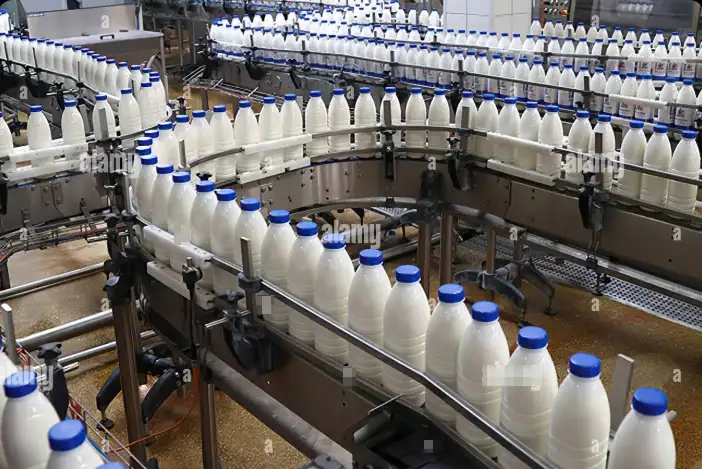
- Filling machine: For plastic bottles, glass bottles, or gable-top cartons (non-aseptic filling; requires refrigerated distribution)
- Cold room: Storage at 0–6°C
B. Yogurt Line
- Process Flow: Pasteurized milk → Cooled to 42–43°C → Inoculation with starter culture → Fermentation → (Optional: Agitation + fruit blending) → Filling → Cold storage for post-ripening
- Dedicated Equipment:
- Fermentation tanks (jacketed for precise temperature control, with optional pH monitoring)
- Agitation/mixing tank (for stirred yogurt with fruit)
- Cup or tub filler (for PP/PS containers)
- Cold room: 4°C for 24-hour post-ripening
C. Ice Cream Line
- Process Flow: Pasteurized mix → Aging (2–6°C for 4–24 hours) → Freezing & aeration (in batch or continuous freezer) → (Optional: Molding/extrusion/cup filling) → Hardening (rapid freeze at –35°C) → Frozen storage
- Dedicated Equipment:
- Aging tank (with refrigeration and agitation)
- Freezer (batch or continuous): Controls overrun (air incorporation)
- Forming/Packaging Systems:
- Cup filler (for soft-serve style)
- Mold injection line (for popsicles/bars)
- Extrusion & cutting system (for sticks, rolls, etc.)
- Blast freezer (IQF tunnel) or hardening room: –35°C or lower for rapid freezing
- Frozen storage warehouse: ≤ –18°C
III. Utility & Support Systems (Shared Plant-Wide)
| System | Description |
|---|---|
| CIP (Clean-in-Place) System | Automated cleaning with caustic (1–2% NaOH), acid (1–2% nitric acid), and rinse water cycles |
| Chilled Water System | Supplies 2–4°C glycol/water for cooling, aging, and freezing processes |
| Compressed Air System | Oil-free, food-grade compressor for pneumatic valves and filling operations |
| Central Control System (PLC/HMI) | Enables recipe management, batch tracking, and data logging (compliant with GMP/HACCP) |
| Quality Control Lab | Equipment for testing fat, protein, acidity, microbiology, viscosity, etc. |
IV. Recommended Plant Layout (Flexible Design)
graph LR
A[Milk Receiving / Clarification / Storage] --> B[Standardization / Blending]
B --> C[Homogenization]
C --> D[Plate Pasteurizer]
D --> E{Flow Diversion Valve}
E -->|Path 1| F[Cooling → Pasteurized Milk Filling]
E -->|Path 2| G[Cool to 43°C → Inoculate → Ferment → Yogurt Filling]
E -->|Path 3| H[Cool → Age → Freeze → Ice Cream Forming]
✅ Advantage: Automatic 3-way valves allow flexible routing from a single pre-treatment line to different product lines, minimizing redundant equipment and enabling batch rotation.
V. Capacity Planning Example (Based on 5 MT Raw Milk/Day)
| Product | Estimated Daily Output | Key Bottleneck Equipment |
|---|---|---|
| Pasteurized Milk | ~4,500 L | Filler speed (e.g., 2,000 bottles/hour) |
| Yogurt | ~3,000 cups (150g each) | Fermentation tank volume (e.g., 2 × 1,000L tanks) |
| Ice Cream | ~1,500 L (at 100% overrun) | Freezer capacity (e.g., 300 L/hour) |
💡 Tip: Use time-based production scheduling—produce pasteurized milk and yogurt during daytime shifts, and run ice cream production overnight (taking advantage of lower electricity rates and required aging time).
VI. Recommended Equipment Suppliers
- Pre-treatment & Pasteurization: Tetra Pak, GEA, Shanghai Wodi, Shandong Zhaofeng
- Yogurt Fermentation & Filling: Xinmeixing, Dali Long, Krones
- Ice Cream Equipment: Tianjin Chunyuan, Carpigiani (Italy), Grammer (Germany)
- CIP & Automation: Siemens, Rockwell Automation, local system integrators
If you have specific requirements—such as daily output volume, factory floor space, budget range, or whether packaging is included—I can provide a customized equipment list and Process Flow Diagram (PFD) tailored to your project.