Pasteurized Milk Production Line Investment: Complete Cost and Equipment Guide
Issacindustry
Pasteurized Milk Line Investment: Equipment Costs & ROI Planning
HUBEI INTOP MACHINERY TECHNOLOGY CO., LTD.
WhatsApp: +86 173 2484 3142 | Email: [email protected] | Web: www.intopmachinery.com
At a Glance
| Metric | Value |
|---|---|
| Entry-level line cost | From $28,000 (FOB China) |
| Typical payback period | 18 – 36 months |
| Gross margin range | 35 – 55% |
| Equipment lifespan | 15+ years |
1. How a Pasteurized Milk Line Works
A complete pasteurization line consists of 8–12 interdependent process stages. Understanding each stage helps you assess equipment needs, cost drivers, and potential bottlenecks before investing.
| Step | Stage | Description |
|---|---|---|
| 01 | Raw Milk Reception & Testing | Milk acceptance platform, density/acidity/fat tests, chilled storage tanks |
| 02 | Pre-cooling & Storage | Plate cooler drops milk to 4°C; insulated silo tanks (5,000–50,000 L) |
| 03 | Filtration & Clarification | Removes impurities; centrifugal clarifier or inline filter |
| 04 | Standardization | Fat content adjusted via centrifuge separator; mixing of cream/skim fractions |
| 05 | Pasteurization | HTST: 72°C × 15 sec. Plate heat exchanger with regeneration section (≥75% heat recovery) |
| 06 | Homogenization | High-pressure homogenizer (150–200 bar) breaks fat globules for stable emulsion |
| 07 | Buffer Tank & CIP | Jacketed balance tank maintains temperature; automated CIP cleans pipelines |
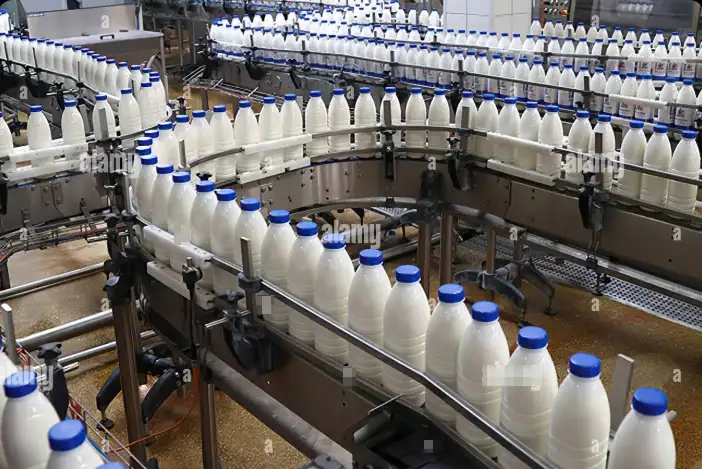
| 08 | Filling & Packaging | Aseptic or refrigerated filling into bottles, Tetra, or pouches with date coding |
Key design principle: The pasteurizer (Step 05) and homogenizer (Step 06) are the heart of the line. Oversizing these by 20–30% relative to current capacity is a proven strategy — it costs little extra upfront but gives you room to grow without replacing core equipment.
2. Core Equipment Specifications & Price Drivers
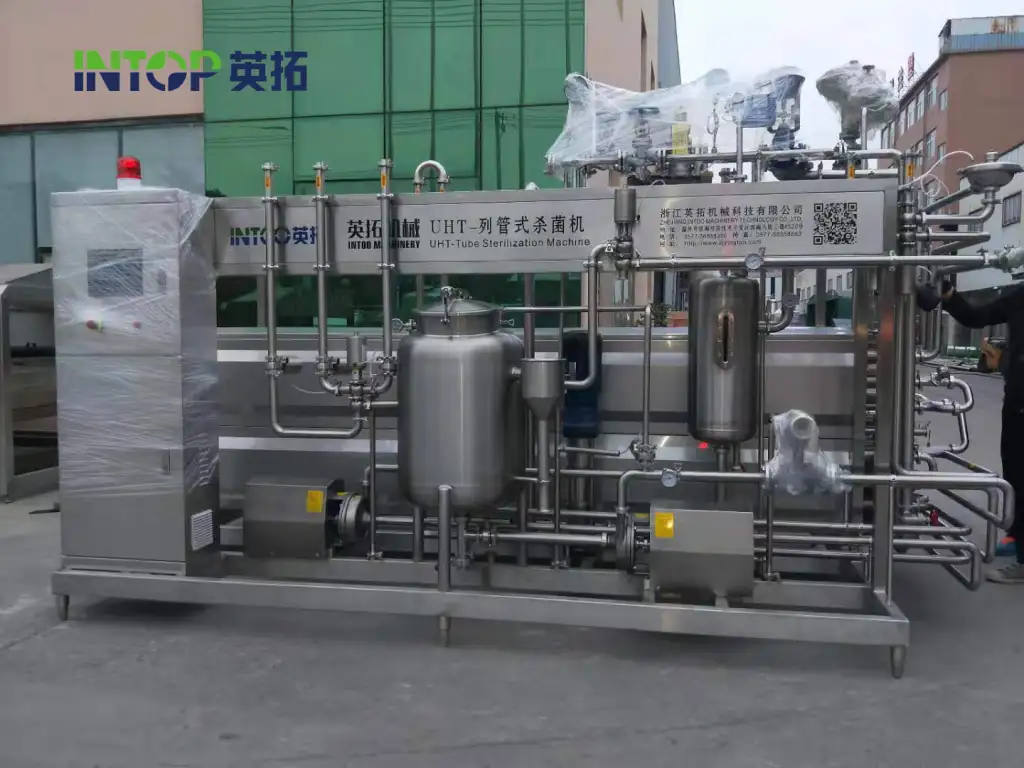
Plate Heat Exchanger Pasteurizer
Core process unit · Price anchor
| Spec | Detail |
|---|---|
| Capacity range | 500 L/H – 20,000 L/H |
| Material | SUS316L (food grade) |
| Price range (FOB) | $4,500 – $55,000 |
| Key cost driver | Plate count, automation level |
| Heat recovery | ≥75% (reduces energy cost) |
| Control | PLC / manual options |
High-Pressure Homogenizer
Texture & shelf-life determinant
| Spec | Detail |
|---|---|
| Capacity range | 500 L/H – 15,000 L/H |
| Working pressure | 150 – 250 bar |
| Price range (FOB) | $3,200 – $38,000 |
| Key cost driver | Pressure rating, brand |
| Stage options | 1-stage / 2-stage head |
| Note | Optional for small lines |
Milk Storage & Buffer Tanks
Raw + finished product holding
| Spec | Detail |
|---|---|
| Sizes | 500 L – 50,000 L |
| Type | Insulated jacketed silo |
| Price range (FOB) | $800 – $18,000 each |
| Key cost driver | Volume, jacket type |
| Insulation | PU foam / mineral wool |
| Agitator | Standard on dairy silos |
CIP (Clean-in-Place) System
Food safety & compliance
| Spec | Detail |
|---|---|
| Tanks included | Acid / Alkali / Water |
| Automation | Manual / Semi / Full auto |
| Price range (FOB) | $2,500 – $22,000 |
| Key cost driver | Number of circuits, auto level |
| Note | Non-negotiable for dairy |
| Standard | 3A / EHEDG compliant |
Filling & Packaging Machine
Consumer-facing output · Biggest variable
| Spec | Detail |
|---|---|
| Types | Bottle / Pouch / Tetra / Bag |
| Speed | 1,000 – 18,000 cups/hr |
| Price range (FOB) | $5,500 – $180,000+ |
| Key cost driver | Format, speed, brand (Tetra Pak) |
| Note | Often 40–60% of total line cost |
| Tip | Chinese fillers = 3–5× saving vs EU |
Control System & Utilities
PLC + steam + chiller + piping
| Spec | Detail |
|---|---|
| PLC brands | Siemens / Schneider / Mitsubishi |
| Steam boiler | Required (0.5–3 T/H) |
| Chiller | Water-cooled / ammonia |
| Piping & valves | SUS304/316L sanitary |
| Price range | $3,000 – $40,000 |
⚠️ Buyer's caution: Always compare equipment on production capacity per USD invested, not headline price. A $6,000 pasteurizer at 1,000 L/H costs $6/L/H. A $14,000 unit at 3,000 L/H costs only $4.67/L/H — 22% more efficient per unit of capacity. Ask for specific plate counts, channel dimensions, and regeneration section ratios before comparing quotes.
3. Investment Tiers — Three Entry Points
Tier 1 · Starter — Small-Scale Line (500 – 2,000 L/H)
Total Investment: $28,000 – $85,000 FOB China
Including main equipment + CIP + basic controls
| Item | Estimated Cost |
|---|---|
| Plate pasteurizer (1,000 L/H) | $6,500 |
| Homogenizer | $4,200 |
| Storage tanks (×3) | $5,800 |
| CIP system (semi-auto) | $3,500 |
| Filling machine (bottle) | $7,500 |
| Piping + panel + freight | $5,000 |
| Total (estimated) | ~$32,500 |
Tier 2 · Mid-Scale Line ⭐ Most Popular (2,000 – 8,000 L/H)
Total Investment: $120,000 – $380,000 FOB China
Full automation, multi-format packaging option
| Item | Estimated Cost |
|---|---|
| Plate pasteurizer (5,000 L/H) | $28,000 |
| Homogenizer + separator | $22,000 |
| Silo tanks ×4 (10,000 L ea.) | $36,000 |
| CIP full-auto system | $14,000 |
| Filling line (bottle + pouch) | $45,000 |
| PLC + piping + freight | $18,000 |
| Total (estimated) | ~$163,000 |
Tier 3 · Industrial — Large-Scale Line (8,000 – 20,000+ L/H)
Total Investment: $500,000 – $2,500,000 FOB China
Full turnkey, multiple formats, SCADA control
| Item | Estimated Cost |
|---|---|
| Pasteurizer (15,000 L/H) | $95,000 |
| Homogenizer + 2-stage sep. | $72,000 |
| Silo farm (4×50,000 L) | $180,000 |
| Automated CIP ×2 circuits | $48,000 |
| Multi-format filling lines | $320,000 |
| SCADA + utilities + install | $125,000 |
| Total (estimated) | ~$840,000 |
✅ Hidden costs to budget for (beyond FOB price):
- Ocean freight + import duty (8–20% depending on country)
- Local installation & commissioning ($5,000–$35,000)
- Factory civil works / utilities hookup (15–25% of equipment cost)
- Working capital for 3–4 months raw milk supply
- Staff training (often included by INTOP)
- Regulatory certification (food safety, CE, local health permit)
4. ROI Model — Sample Calculation
Assumptions (Mid-Scale Line, 2,000 L/H)
| Parameter | Value |
|---|---|
| Line capacity | 2,000 L/H |
| Operating hours/day | 16 hrs (2 shifts) |
| Working days/year | 300 days |
| Selling price | $1.20 / L |
| Raw milk cost | $0.42 / L |
| Operating cost ratio | 22% of revenue |
| Total investment | $163,000 |
Results
| Metric | Value |
|---|---|
| Annual production volume | 9,600,000 L |
| Annual gross revenue | $11,520,000 |
| Annual raw milk expense | $4,032,000 |
| Annual operating expense | $2,534,400 |
| Annual net profit (est.) | ~$4,953,600 |
| Gross profit margin | ~43% |
| Equipment payback period | ~12 months |
Note: Payback period shown is based on equipment cost only. Including civil works, installation, and working capital, total payback typically ranges 18–36 months depending on market conditions and utilization rate.
Cumulative Cash Flow — Payback Projection (36 Months)
Ramp-up model: 30% capacity Months 1–2 → 60% Month 3 → 80% Months 4–5 → 100% Month 6+
USD ($K)
+5,000 |                                              ████████
+4,000 |                                         ████
+3,000 |                                    █████
+2,000 |                               █████
+1,000 |                          █████
     0 |─────────────────────────█ ← BREAKEVEN
  -163 |███████
       └────────────────────────────────────────────────────→
        M0   M3   M6   M9   M12  M15  M18  M21  M24  M27  M30 M33 M36
5. China vs. European Equipment — Objective Comparison
| Criteria | Chinese Equipment (INTOP) | European Equipment (GEA, SPX, APV) | Verdict |
|---|---|---|---|
| Price (mid-scale line) | $120K – $380K | $450K – $1,800K | 🇨🇳 China wins |
| Lead time | 60–90 days | 120–180 days | 🇨🇳 China wins |
| Material standards | SUS304/316L, food grade | SUS316L, pharmaceutical grade | 🇪🇺 Europe slightly ahead |
| PLC / automation | Siemens / Schneider options | Siemens / Allen-Bradley | 🟰 Comparable |
| CE certification | ✅ Available on request | ✅ Standard | 🟰 Comparable |
| After-sales support | Remote + optional site engineers | Global network, faster local | 🇪🇺 Europe advantage |
| Spare parts | Fast from China (DHL 3–5 days) | Local distributors in major markets | 🟰 Comparable |
| ROI advantage | 3–5× better capital efficiency | Lower per-unit maintenance (long-run) | 🇨🇳 China wins for new investors |
| Hygienic design (3A/EHEDG) | ✅ Major suppliers certified | ✅ Industry standard | 🟰 Comparable (top-tier Chinese) |
| Customization flexibility | ✅ High — OEM common | Standard configs preferred | 🇨🇳 China wins |
6. 7 Factors That Determine Profitability
1. Raw Milk Sourcing & Price Lock
The single biggest cost variable. Operators with farm contracts or cooperative ownership achieve 15–25% lower input costs vs. spot-market buyers. Negotiate 6–12 month supply contracts before ordering equipment.
2. Utilization Rate (OEE)
A line running at 60% capacity is 40% less profitable per L/H invested than one at 95%. Target >80% OEE from Month 6. This requires demand pre-selling and aggressive distribution channel development before commissioning.
3. Brand vs. Private Label Mix
Branded pasteurized milk commands 30–80% premium over private label. Even a modest 30% branded / 70% private label mix can increase blended margin by 12–18 percentage points.
4. Cold Chain Infrastructure
Pasteurized milk (unlike UHT) requires refrigerated distribution. Operators who control or partner with cold chain assets have dramatically lower spoilage loss and longer effective shelf-life reach.
5. Energy Optimization
Pasteurization is energy-intensive. PHE with ≥75% heat regeneration, variable-speed drives on pumps, and efficient steam boiler management can cut energy cost by 25–35% vs. unoptimized lines.
6. Regulatory Positioning
Early engagement with food safety authorities (HACCP, ISO 22000, local food law compliance) prevents costly retrofits. Non-compliance shutdowns are the #1 cause of ROI collapse in new dairy plants.
7. Technical Team Quality
A skilled dairy technician who can manage CIP cycles, temperature logs, and minor maintenance prevents 80% of downtime events. Factor in training costs — INTOP offers online + on-site training with every line.
7. Risk Analysis
Market Risk — Demand Volatility & Competition
Price wars from large dairy multinationals or informal sector milk sellers can compress margins faster than projected.
Mitigation: Secure off-take agreements for ≥60% of projected volume before commissioning. Target institutional buyers (hotels, hospitals, schools) for price stability.
Operational Risk — Raw Milk Supply Disruption
Seasonal dry periods, disease outbreaks (FMD, brucellosis), or farmer side-selling can create supply gaps that leave your capital-intensive equipment idle.
Mitigation: Multi-supplier sourcing from at least 3–5 independent farms or cooperatives. Keep 2–3 day buffer in chilled storage silos.
Regulatory Risk — Food Safety Non-Compliance
Failing a health authority inspection due to inadequate CIP procedures or temperature log failures can result in production shutdown — worst-case, brand destruction.
Mitigation: Invest in certified CIP automation and temperature data logging from Day 1. Train QC staff before production starts. Build HACCP documentation during equipment installation phase.
Technical Risk — Equipment Breakdown & Downtime
Pasteurized milk has a 5–14 day shelf life. A 48-hour equipment failure during peak season can write off an entire production batch and damage retail relationships.
Mitigation: Stock critical spares (pump seals, PHE gaskets, homogenizer valves). Negotiate 24-hour remote support SLA with supplier. INTOP provides lifetime spare parts guarantee on supplied equipment.
8. Why INTOP Machinery
01. Full-Line Engineering Capability
We design, manufacture, and integrate complete pasteurized milk lines — pasteurizer, homogenizer, tanks, CIP, filling — from a single supplier with no integration risk.
02. International-Grade Materials
All product-contact surfaces use SUS316L or SUS304 stainless steel. Seals are FDA-grade silicone or EPDM. Available with CE certification on request.
03. Flexible Automation Level
From budget manual lines to full PLC/SCADA-controlled plants with Siemens or Schneider automation — configured to your team's technical capability and budget.
04. Turnkey Project Support
Factory layout planning, utilities specification (steam, chiller, compressed air), installation supervision, operator training, and commissioning — all included for full projects.
05. Competitive Pricing with Quality Guarantee
Our pricing is 40–70% below equivalent European equipment. We back every line with a 12-month parts warranty and lifetime technical support commitment.
06. Fast Lead Time & Reliable Delivery
Standard lines ship in 45–75 days after deposit. We have established export logistics partnerships covering all major global ports with full CIF documentation.
Contact & Request a Quote
HUBEI INTOP MACHINERY TECHNOLOGY CO., LTD.
| Channel | Detail |
|---|---|
| [email protected] | |
| +86 173 2484 3142 | |
| 🌐 Website | www.intopmachinery.com |
To receive a detailed project proposal within 48 hours, provide:
- Target capacity (L/H)
- Budget range (USD)
- Destination country
- Product types (fresh milk / flavored / yogurt etc.)
- Packaging format preference
Investment figures are estimates only. Final pricing requires formal quotation based on specific project requirements. © 2025 Hubei INTOP Machinery Technology Co., Ltd.